



Ahmedabad has become one of India’s most attractive real estate destinations for Non-Resident Indians (NRIs). Strong infrastructure, expanding business districts, modern residential developments, and improving connectivity continue to attract overseas buyers looking for long-term investments or a future home in India.
However, purchasing property from abroad involves more than choosing the right project. NRIs must understand the applicable legal framework, documentation requirements, financial regulations, and taxation rules before completing a transaction. Knowing these procedures in advance helps reduce delays and ensures the purchase complies with Indian regulations.
Buying property in Ahmedabad as an NRI is permitted under Indian law, subject to specific regulations issued by the Reserve Bank of India (RBI) and the Foreign Exchange Management Act (FEMA). By verifying ownership documents, completing the registration process correctly, and understanding tax obligations, NRIs can invest with greater confidence.
Legal Requirements Every NRI Should Understand Before Buying Property
Understanding the legal process is the first step towards making a secure investment.
Indian regulations allow NRIs to purchase most residential and commercial properties without requiring prior approval from the RBI, provided the transaction complies with FEMA and other applicable laws.
Who Is Eligible to Purchase Property?
NRIs and Overseas Citizens of India (OCI) are generally allowed to purchase residential and commercial properties in India.
However, agricultural land, plantation property, and farmhouses are subject to separate regulations and are generally not permitted for purchase by NRIs unless allowed under specific legal provisions.
Before investing, buyers should confirm that the chosen property falls within the categories permitted under applicable regulations.
Essential Documents Required to Purchase the Properties
Preparing documentation before initiating the purchase helps simplify the transaction.
Commonly required documents such as:
- Valid passport
- OCI or PIO card (where applicable)
- PAN card
- Overseas address proof
- Indian address proof (if available)
- Passport-size photographs
- Power of Attorney (if someone represents the buyer in India)
- Property-related legal documents
- Sale Agreement and Sale Deed
Depending on the lender or developer, additional documentation may also be required.
Property Registration Process

Property registration is one of the most important legal formalities after the Sale Deed has been executed.
If the buyer cannot remain in India during registration, a legally executed Power of Attorney may authorise a trusted representative to complete the registration on the buyer’s behalf, subject to applicable legal requirements.
All applicable stamp duty and registration charges must be paid before ownership is officially recorded.
Understanding Tax Responsibilities
NRIs should understand the tax implications before purchasing property as per their requirements.
Taxes may apply during purchase, ownership, rental income, and eventual resale. Depending on the transaction, Tax Deducted at Source (TDS), capital gains tax, and income tax provisions may also become relevant.
Since tax regulations may vary according to individual circumstances, consulting a qualified tax advisor before completing the transaction is recommended.
Premium Locations Preferred by NRI Investors in Ahmedabad
Ahmedabad offers a diverse mix of residential and commercial properties suitable for different budgets.
Areas such as SG Highway, Sindhu Bhavan Road, Science City, Thaltej, Shela, South Bopal, Vaishnodevi, Motera, Shilaj, and neighbourhoods benefiting from GIFT City connectivity continue attracting NRI buyers due to their infrastructure, employment opportunities, educational institutions, and lifestyle amenities.
Luxury apartments, gated communities, premium villas, and mixed-use developments remain particularly popular among overseas investors seeking long-term appreciation.
Financial Planning Before Buying Property in Ahmedabad

Apart from legal compliance, understanding the financial process helps NRIs complete transactions more efficiently.
Home Loan Options for NRIs
Several Indian banks and housing finance companies offer home loans specifically designed for eligible NRIs.
Loan approval generally depends on factors like income, employment, repayment capacity, country of residence, credit assessment, and property valuation.
Comparing lenders before applying can help buyers secure suitable financing terms.
Read also: Home Loan Eligibility Guide
Accepted Payment Methods
Property payments must comply with FEMA regulations.
| Payment Method | Commonly Accepted |
| NRE Account | ✔ |
| NRO Account | ✔ |
| FCNR Account | ✔ |
| Home Loan from Approved Lender | ✔ |
| Cash Transactions | Not permitted under applicable regulations |
Always verify the permitted payment methods before initiating the transaction.
Understanding Repatriation of Funds
Many NRIs eventually sell their Indian property or earn rental income from it.
The repatriation of sale proceeds or rental income is governed by FEMA and RBI regulations. Buyers should retain all transaction records, tax documents, and banking records to facilitate future repatriation, subject to applicable rules.
Professional financial advice is recommended before transferring funds overseas.
Why Ahmedabad Continues to Attract NRI Investors
Ahmedabad combines strong economic growth with improving infrastructure and a relatively affordable property market compared to many other metropolitan cities.
The expansion of metro connectivity, improved road networks, commercial development, and business-friendly policies continue strengthening the city’s long-term investment potential.
Steady demand from professionals, students, and businesses also supports residential and rental markets across several neighbourhoods.
Choosing the Right Residential or Commercial Investment as per Requirements
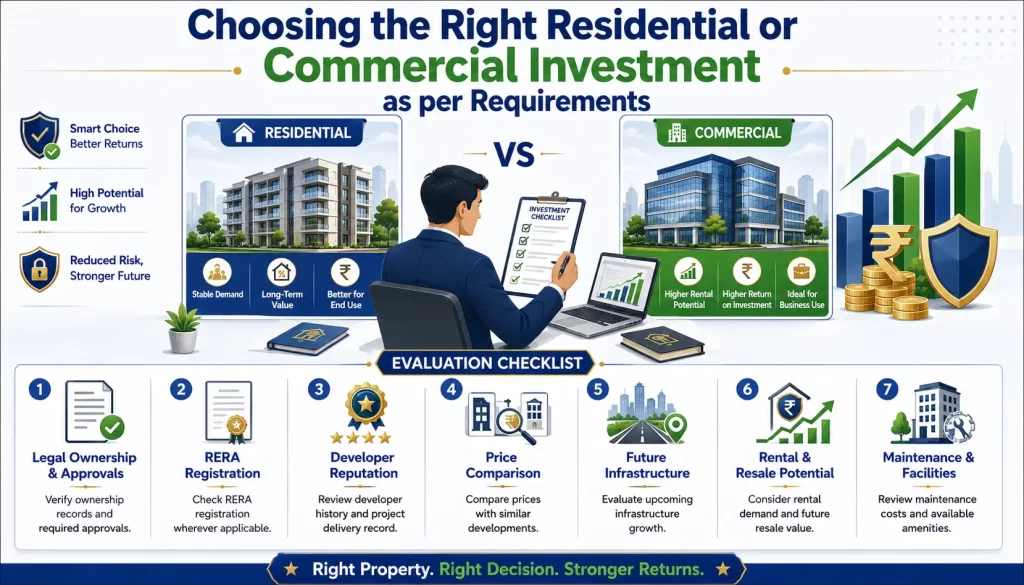
Not every property offers the same long-term value.
Before making a purchase, buyers should evaluate several important factors:
- Verify legal ownership and approvals.
- Check RERA registration where applicable.
- Research the developer’s reputation and project history.
- Compare prices across similar developments.
- Evaluate future infrastructure plans.
- Consider rental demand and resale potential.
- Review maintenance costs and community facilities.
A thorough evaluation helps reduce investment risk while improving long-term returns.
Why Luxury Properties Appeal to Many NRIs?
Luxury real estate has become an increasingly attractive option for overseas buyers seeking both lifestyle and investment benefits.
Premium developments often offer larger living spaces, better amenities, improved security, professional property management, and locations close to business districts and major infrastructure projects.
As Ahmedabad continues expanding its commercial ecosystem, luxury housing is expected to remain attractive for both self-use and long-term capital appreciation.
Final Thoughts
Buying property in Ahmedabad as an NRI is a structured process when approached with proper planning and legal guidance. Understanding eligibility, preparing the required documentation, complying with financial regulations, and completing due diligence can significantly reduce the risks associated with property investment.
Whether you’re purchasing a family home, a luxury apartment, or a commercial asset, focusing on legal compliance and long-term market fundamentals will help you make a more informed investment decision.
Frequently Asked Questions
In most cases, NRIs can purchase commercial and residential properties without obtaining prior RBI approval, subject to FEMA regulations.
Generally, NRIs are not permitted to purchase agricultural land, plantation property, or farmhouses unless permitted under applicable laws.
Yes. Many Indian banks and housing finance companies provide home loans to eligible NRIs, subject to their lending criteria.
If the buyer cannot remain in India during the transaction, a legally executed Power of Attorney may authorise a representative to complete the formalities.
Depending on the transaction, buyers may need to consider stamp duty, registration charges, TDS, income tax on rental income, and capital gains tax upon resale.
SG Highway, Science City, Thaltej, Shela, South Bopal, Motera, Vaishnodevi, Sindhu Bhavan Road, and areas influenced by GIFT City continue to attract significant NRI interest.
Leave a Reply