



Purchasing a property involves much more than paying the agreed purchase price. Buyers must also account for statutory charges such as stamp duty and registration fees, which are mandatory for legally transferring ownership. These costs are an essential part of every real estate transaction and should be factored into your budget from the beginning.
Whether you are buying your first apartment, investing in commercial property, or purchasing property in Gujarat, understanding the latest Stamp Duty & Registration Charges in Gujarat 2026 can help you avoid unexpected expenses and complete the registration process smoothly.
This guide explains how stamp duty works, the latest applicable charges, factors that influence the amount payable, and the steps involved in registering your property.
A Quick Overview of Stamp Duty & Registration Charges
Before signing a sale deed, buyers should understand that stamp duty and registration charges serve different purposes.
Stamp duty is a tax collected by the state government on property transactions, while registration charges are paid for officially recording the ownership transfer with the Sub-Registrar’s Office. Without completing both, the property transaction is not considered legally registered.
Planning these expenses allows buyers to manage their finances more effectively and prevents delays during property registration.
Understanding Stamp Duty in Gujarat

Stamp duty is a government levy imposed whenever ownership of a property changes hands. It applies to residential properties, commercial units, plots, agricultural land, gift deeds, lease agreements, and several other legal property documents.
The amount payable is generally calculated on the higher of the property’s transaction value or the government-assessed value.
Paying stamp duty ensures that the property transaction becomes legally enforceable while protecting both buyers and sellers during future ownership disputes.
Latest Stamp Duty & Registration Charges in Gujarat
Although rates may change through government notifications, buyers should always verify the latest applicable charges before registering a property.
| Charge | Applicable Rate* |
|---|---|
| Stamp Duty | As per prevailing Gujarat Government rates |
| Registration Charges | As notified by the Registration Department |
| Applicable Property Value | Higher of Market Value or Jantri Value |
| Applicable Property Types | Residential, Commercial, Industrial & Land |
Note: Rates may vary depending on the type of transaction, ownership category, property location, and applicable government notifications. Always verify the latest rates through the official Gujarat Registration Department before completing a transaction.
How to Estimate Stamp Duty and Registration Costs
Before finalising a purchase, it is helpful to estimate the total registration expenses.
In most cases, the government considers either:
- The property’s market value
- The Jantri (government guidance) value
Whichever amount is higher generally becomes the basis for calculating stamp duty.
Apart from stamp duty, buyers should also include registration charges and any applicable administrative fees while preparing their overall property budget. Many banks and financial institutions also recommend estimating these expenses before approving home loans to ensure accurate financial planning.
Completing Property Registration Online in Gujarat
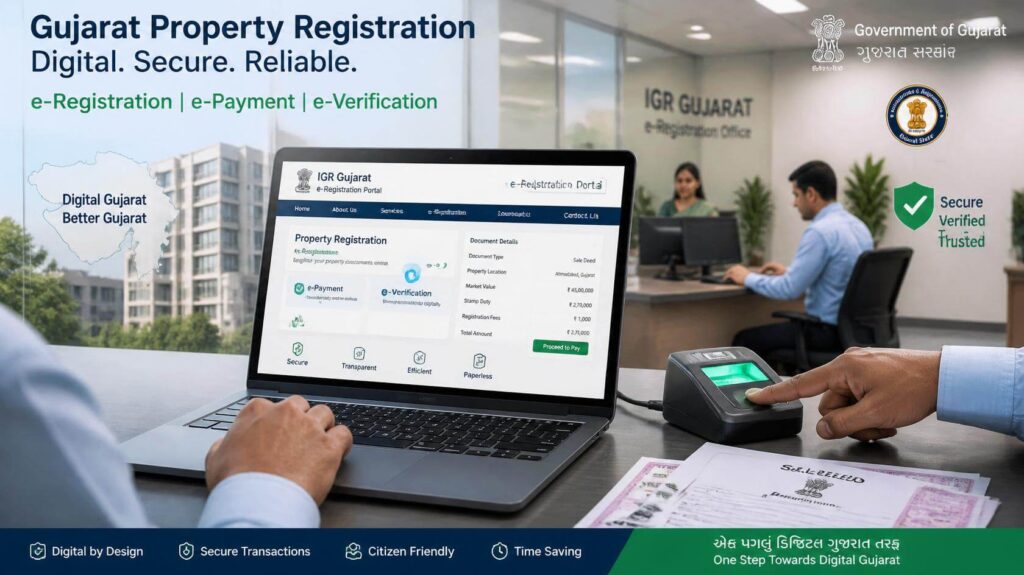
The Gujarat Government has digitised several property registration services, making the process more convenient for buyers.
Generally, the online process includes verifying property details, preparing the required documents, calculating applicable charges, scheduling an appointment with the Sub-Registrar’s Office, and completing biometric verification before the sale deed is officially registered.
Although certain verification procedures still require physical presence, online services have significantly reduced paperwork and improved transparency throughout the registration process.
Factors That Can Influence Stamp Duty Payable
Several factors determine the total stamp duty payable on a property transaction.
These include:
- Property location
- Residential or commercial property type
- Market value of the property
- Applicable Jantri value
- Nature of ownership
- Type of transaction (sale, gift, lease, exchange, etc.)
- Government policies and applicable concessions
- Applicable legal provisions at the time of registration
Understanding these factors helps buyers estimate costs more accurately before signing any agreement.
Documents Required for Property Registration
Keeping all documents ready before visiting the registration office helps avoid unnecessary delays.
The commonly required documents include:
- Sale deed or conveyance deed
- Identity proof of buyer and seller
- Address proof
- PAN card
- Aadhaar card (where applicable)
- Passport-size photographs
- Property tax receipts (if applicable)
- Previous ownership documents
- Encumbrance-related documents (where required)
- Home loan sanction documents (if financed)
Additional documentation may be required depending on the nature of the transaction or local registration requirements.
Common Errors Buyers Should Avoid During Registration
Even experienced buyers sometimes overlook important details during registration. Small mistakes can result in delays or legal complications later.
Some of the most common mistakes include verifying documents only at the last minute, ignoring government valuation, failing to confirm property ownership records, or not reviewing the sale deed carefully before signing.
Buyers should also ensure that all personal information, survey numbers, property dimensions, and payment details are accurate before the document is registered. Consulting a legal professional or experienced property advisor can help minimise risks during the registration process.
Financing Your Property Purchase with a Home Loan

Many property buyers rely on home loans to finance their purchase. While lenders generally finance a significant portion of the property’s value, stamp duty and registration charges are usually borne separately by the buyer.
Before applying for a loan, buyers should understand the lender’s eligibility criteria, compare interest rates, evaluate repayment options, and estimate all additional costs associated with purchasing the property.
Planning these expenses early helps avoid financial strain during the final stages of the transaction.
Final Thoughts
Understanding Stamp Duty & Registration Charges in Gujarat 2026 is essential for anyone planning to buy property in the state. These statutory charges not only make the transaction legally valid but also play a crucial role in protecting ownership rights.
Whether you’re purchasing a residential apartment, commercial property, or investment plot, budgeting for registration costs alongside the property’s purchase price helps ensure a smoother property buying experience. By verifying the latest government rates, preparing the required documentation, and following the correct registration process, buyers can complete transactions with greater confidence and avoid unnecessary complications.
Frequently Asked Questions
Stamp duty is a government tax paid on property transactions to make the transfer of ownership legally valid.
Yes. Stamp duty is a tax collected on the transaction, while registration charges are paid to officially register the property in the buyer’s name.
Stamp duty is generally calculated on the higher of the property’s market value or the government-assessed Jantri value, subject to applicable government rules.
Yes. The Gujarat Government provides online services for calculating charges, preparing documents, and initiating the registration process through its official registration portal, although certain verification steps may still require an in-person visit.
Commonly required documents include the sale deed, identity proof, address proof, PAN card, Aadhaar card (where applicable), photographs, previous ownership records, and property-related documents.
In most cases, home loans finance the property’s purchase price, while stamp duty and registration charges are paid separately by the buyer unless otherwise specified by the lender.


Leave a Reply