



Buying a property is one of the most significant financial decisions you’ll ever make. While location, budget, and amenities often take centre stage, verifying the property’s legal documents is equally important. A well-documented property reduces the risk of ownership disputes, legal complications, and financial losses after purchase.
Whether you’re planning to purchase your first home, invest in commercial real estate, or buy properties in Ahmedabad, understanding the essential property documents can help you make a confident and secure investment.
This guide explains the key documents every buyer should verify, when they are required during the buying process, and how to ensure the property is legally clear before registration.
Introduction
Property verification is not just a legal formality; it protects your ownership rights. Before signing any agreement or paying a booking amount, buyers should review ownership records, approvals, tax receipts, and registration documents to ensure the property has a clear legal status.
Completing this due diligence early can prevent delays in loan approval, registration, and possession while providing peace of mind throughout the transaction.
Essential Legal Documents Every Property Buyer Should Verify
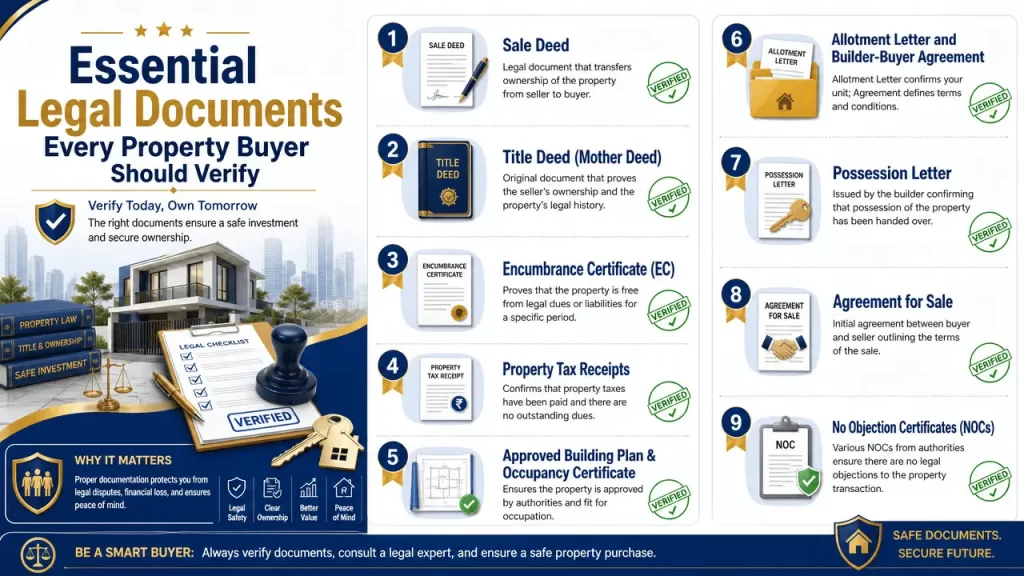
Every property transaction involves multiple legal documents that establish ownership, confirm approvals, and validate the property’s legal status.
1. Sale Deed
The Sale Deed is the most important document in any property transaction. It legally transfers ownership from the seller to the buyer once the property is registered.
Before purchasing, ensure the Sale Deed accurately reflects the property details, ownership information, consideration amount, and registration particulars.
2. Title Deed (Mother Deed)
The Title Deed establishes the legal ownership history of the property. It confirms that the seller has the lawful authority to transfer ownership.
Buyers should verify that the title is clear, marketable, and free from legal disputes or competing ownership claims.
3. Encumbrance Certificate (EC)
An Encumbrance Certificate confirms whether the property has any outstanding loans, mortgages, legal claims, or financial liabilities.
A clean EC indicates that the property is generally free from registered encumbrances during the specified period.
4. Property Tax Receipts
Latest property tax receipts demonstrate that municipal taxes have been paid regularly by the current owner.
Pending tax dues may become the new owner’s responsibility after purchase, making this verification particularly important.
5. Approved Building Plan & Occupancy Certificate
For apartments and constructed properties, buyers should verify that the building has received approval from the competent planning authority.
The Occupancy Certificate confirms that construction complies with approved plans and that the building is considered fit for occupation.
6. Allotment Letter and Builder-Buyer Agreement
For under-construction projects, the builder issues an allotment letter confirming the property allocation.
The Builder-Buyer Agreement outlines payment schedules, possession timelines, specifications, common amenities, cancellation clauses, and other contractual obligations.
7. Possession Letter
The Possession Letter confirms the date on which the developer officially hands over the property to the buyer.
This document is particularly important for newly constructed residential projects.
8. Agreement for Sale
The Agreement for Sale records the mutually agreed terms before the final Sale Deed is executed.
It generally specifies the purchase price, payment schedule, possession timeline, responsibilities of both parties, and conditions governing the transaction.
9. No Objection Certificates (NOCs)
Depending on the property’s nature and location, several No Objection Certificates may be required from relevant authorities.
These approvals help confirm that the property complies with applicable regulations and can be legally transferred.
Property Documents at a Glance
| Document | Why It Matters |
| Sale Deed | Establishes legal ownership transfer |
| Title Deed | Confirms ownership history |
| Encumbrance Certificate | Verifies legal and financial liabilities |
| Property Tax Receipts | Confirms municipal tax payments |
| Building Plan Approval | Ensures authorised construction |
| Occupancy Certificate | Confirms the building is fit for occupation |
| Builder-Buyer Agreement | Defines contractual obligations |
| Possession Letter | Records physical handover |
| No Objection Certificates | Verifies statutory approvals |
How to Verify Property Documents Before Buying
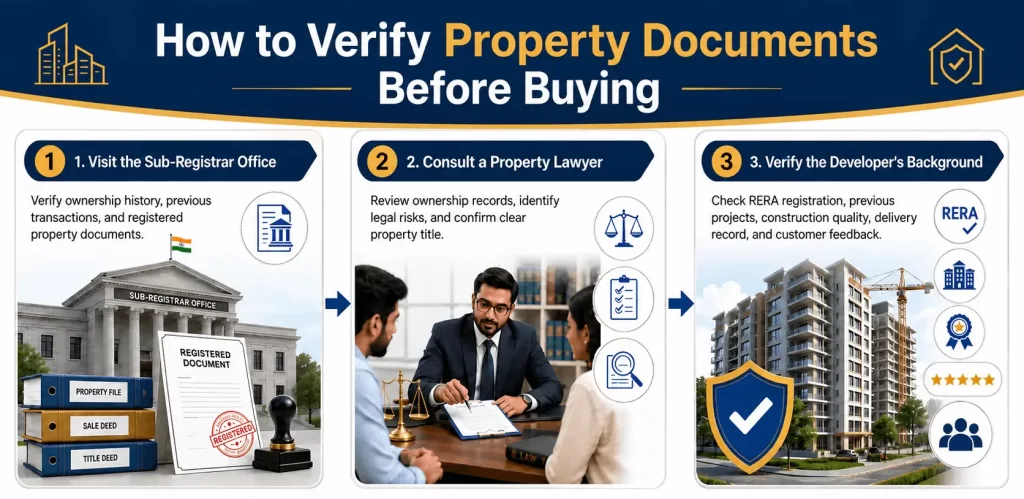
Proper document verification is one of the most effective ways to minimise legal risks.
Visit the Sub-Registrar Office
The Sub-Registrar’s Office maintains official property registration records. Buyers can verify ownership history, previous transactions, and registered documents before completing the purchase.
Consult a Property Lawyer
An experienced legal professional can examine ownership records, identify hidden risks, and confirm whether the property’s title is legally clear.
Professional legal verification is particularly valuable when purchasing high-value residential or Commercial properties in Ahmedabad.
Verify the Developer’s Background
If you’re buying from a developer, review the company’s previous projects, RERA registration, construction quality, delivery history, and customer feedback before making a financial commitment.
When Should These Documents Be Collected?
Different documents become relevant at different stages of the buying journey.
Before Booking the Property
- Title verification
- Project approvals
- Builder credentials
- Preliminary legal documents
Before Home Loan Processing
- Sale Agreement
- Income documents
- Property valuation documents
- Legal verification reports
During Property Registration
- Registered Sale Deed
- Identity documents
- PAN Card
- Aadhaar Card (where applicable)
- Payment receipts
After Taking Possession
- Possession Letter
- Occupancy Certificate
- Maintenance records
- Property tax documentation
Collecting documents at the appropriate stage helps avoid unnecessary delays and ensures a smoother buying experience.
Documents Needed for Property Registration
Property registration requires both buyer and property-related documents.
Commonly required documents:
- Registered Sale Deed
- Identity proof
- Address proof
- PAN Card
- Aadhaar Card (where applicable)
- Passport-size photographs
- Property tax receipts
- Encumbrance Certificate
- Building approvals
- Stamp duty payment proof
- Registration fee payment receipt
Before registration, buyers should also review the applicable Jantri Rate Gujarat, as it plays an important role in determining the government’s property valuation for stamp duty purposes.
A Helpful Checklist Before Signing the Final Agreement
Before making the final payment, ensure you have completed the following checks:
- Verify ownership through the Title Deed.
- Obtain the latest Encumbrance Certificate.
- Confirm all municipal taxes have been paid.
- Review approved building plans and occupancy documents.
- Check the builder’s RERA registration, if applicable.
- Ensure all payment receipts are properly documented.
- Verify the property’s dimensions and survey details.
- Review every clause in the Sale Agreement before signing.
- Confirm possession timelines in writing.
- Consult a legal expert if any document appears incomplete or inconsistent.
Following this checklist significantly reduces legal risks and helps buyers proceed with greater confidence.
What Sellers Should Keep Ready Before Listing a Property
Property sellers should also organise their documentation before marketing their property.
Important documents typically include the original Sale Deed, Title Deed, Encumbrance Certificate, tax receipts, identity documents, building approvals, Occupancy Certificate, and any applicable NOCs.
Having complete documentation readily available increases buyer confidence and often speeds up negotiations and registration.
Final Thoughts
Purchasing property involves much more than selecting the right location or negotiating the best price. Careful verification of legal documents protects your investment and ensures that ownership is transferred without complications.
Whether you’re planning to purchase residential properties, invest in commercial real estate, or explore opportunities to buy properties in Ahmedabad, conducting thorough document verification should always be part of your due diligence process.
By reviewing ownership records, checking statutory approvals, consulting legal professionals, and completing registration formalities correctly, buyers can significantly reduce risks and move forward with confidence in one of life’s most important investments.
Frequently Asked Questions
The Sale Deed is the most important document because it legally transfers ownership from the seller to the buyer after registration.
It helps verify whether the property has any existing loans, mortgages, or legal liabilities that could affect ownership.
Yes. The Title Deed confirms legal ownership and ensures the seller has the right to transfer the property.
Yes. Consulting a qualified property lawyer helps identify legal issues, ownership disputes, or missing approvals before completing the transaction.
The Jantri Rate in Gujarat is the government’s minimum valuation of a property and is used to calculate stamp duty and registration charges during property transactions.
It is not advisable. Approved building plans and the Occupancy Certificate help confirm that the property complies with applicable construction regulations and is legally fit for occupation.



Leave a Reply